

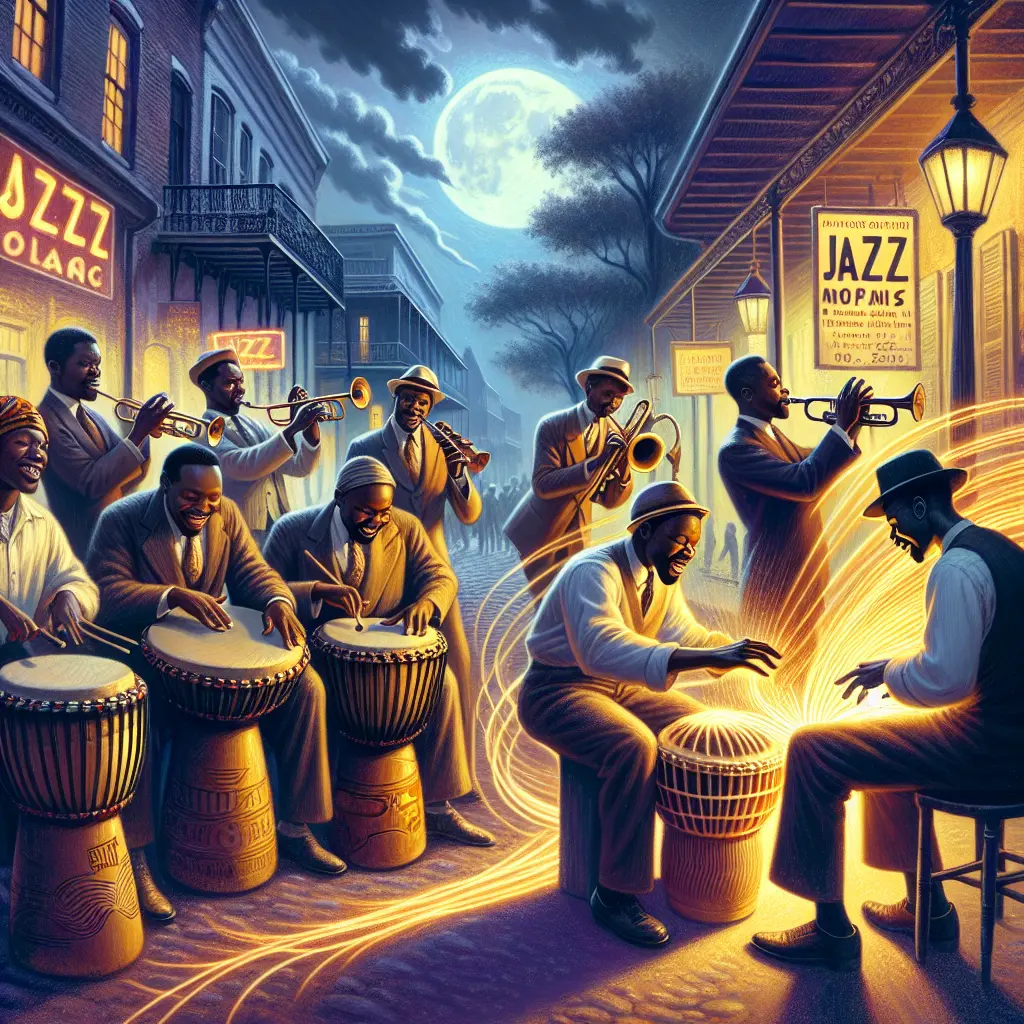
The vibrant, pulsating heart of jazz music beats with the rich and diverse rhythms of Africa. From the lively streets of New Orleans to the smoky clubs of early 20th-century America, the influence of African rhythms on early jazz music is undeniable. The history of jazz is a testament to the profound cultural exchange in jazz, where African drumming in jazz intertwined seamlessly with other musical traditions, birthing a genre that would captivate the world.
As we delve into the jazz origins, it becomes evident how traditional African music laid the foundation for what would become one of America's most celebrated musical genres. Rhythmic patterns in jazz echo the complex beats found in African music, highlighting the cross-cultural influences in music that have shaped the very fabric of jazz evolution.
Jazz and African culture share a symbiotic relationship, one that emphasizes the beauty and innovation born from cultural intersections. This narrative invites enthusiasts and newcomers alike to explore the intricate tapestry of jazz development and its ongoing legacy.
The influence of African rhythms on early jazz music is a profound testament to the cultural exchange that birthed a dynamic and captivating musical genre. As we explore this fascinating intersection, we delve into the rhythmic complexity and improvisational spirit rooted in African traditions that continue to shape jazz's evolution.
African Rhythms in Jazz Origins
Syncopation and Polyrhythms
The power of syncopation in jazz cannot be overstated. Syncopation, which involves placing emphasis on unexpected beats, creates a sense of surprise and excitement in music, a characteristic that is heavily drawn from African musical traditions. These syncopated rhythms are what give jazz its distinctive swing and have been crucial in its development.
African drumming in jazz, with its use of polyrhythms (simultaneous contrasting rhythms), has contributed to this effect, allowing for more complex and engaging compositions.
Jazz Evolution and Cultural Exchange
The evolution of jazz is marked by a constant cultural exchange in jazz that reflects a blend of diverse musical influences. African American music history is rich with examples of how African rhythms were interwoven with European harmonies and American blues to create something entirely new.
Case Studies: Early Jazz Innovators
1. Jelly Roll Morton - Often regarded as the first true composer of jazz music, Morton's compositions were heavily influenced by the syncopated rhythms he heard growing up in New Orleans, a melting pot of African, Caribbean, and European cultures.
2. Louis Armstrong - Known for his innovative trumpet playing and scat singing, Armstrong’s work is an example of how African American musicians used improvisation—a technique rooted in African musical traditions—to redefine jazz.
3. Duke Ellington - His orchestra was famous for its sophisticated arrangements that incorporated African rhythms into big band jazz, creating complex and layered musical pieces that captivated audiences worldwide.
Rhythmic Patterns in Jazz Development
Traditional African music often features call-and-response patterns, a conversational style that has been absorbed into jazz improvisation techniques. This dialogic form is evident in many jazz performances, where musicians engage in spontaneous exchanges that reflect both individual creativity and collective harmony.
The Modern Influence
Even today, the legacy of African rhythms continues to influence contemporary music genres. This ongoing evolution demonstrates the timeless appeal and adaptability of African rhythms within the global music landscape.
Engaging with Jazz's Cultural Legacy
Are you curious about how these cross-cultural influences in music continue to resonate today? Exploring the rhythmic diversity and historical depth of jazz not only enriches our understanding of the genre but also highlights the enduring impact of African musical traditions on global music culture.
In summary, the influence of African rhythms on early jazz music is not just a chapter in history but a continuous thread that weaves through the fabric of jazz evolution. As we listen to and engage with this genre today, we honor its origins and celebrate the rich cultural exchanges that continue to inspire artists around the world.
In conclusion, the profound influence of African rhythms on early jazz music is a testament to the dynamic cultural exchange that continues to shape this captivating genre.
Keep swinging to the rhythm of cultural unity and innovation!


Leave a Comment